By Desirée Gagné, MA, OTR/L
In the realm of occupational therapy, the quest for empowering individuals facing daily challenges takes center stage. A crucial aspect of this journey lies in the integration of adaptive equipment—specialized tools and devices designed to foster independence and improve the quality of life for those with physical or cognitive impairments.
Understanding Adaptive Equipment
Adaptive equipment refers to a range of specialized tools and devices crafted to enable individuals to participate in daily activities with greater ease. The primary goal is to break down barriers, allowing individuals with functional limitations to perform tasks that might otherwise prove challenging.
Types of Adaptive Equipment
Mobility Devices:
1. Wheelchairs: These come in various types, each tailored to specific needs. Manual, electric, or custom-designed, wheelchairs enhance mobility and independence.
2. Walkers and Canes: Providing stability and support, these aids are invaluable for individuals seeking improved balance and confidence in their movements.
While mobility devices, such as wheelchairs, walkers, and canes, play a crucial role in improving overall mobility and physical function, their emphasis often aligns more closely with physical therapy. Physical therapists work diligently to enhance all aspects related to improved mobility.
Activities of Daily Living (ADL) Aids:
In the realm of occupational therapy, ADL aids take center stage. These include dressing aids, eating and drinking aids, and bathing and toileting aids. These tools are often recommended to enable individuals to participate actively in the routines of daily life.
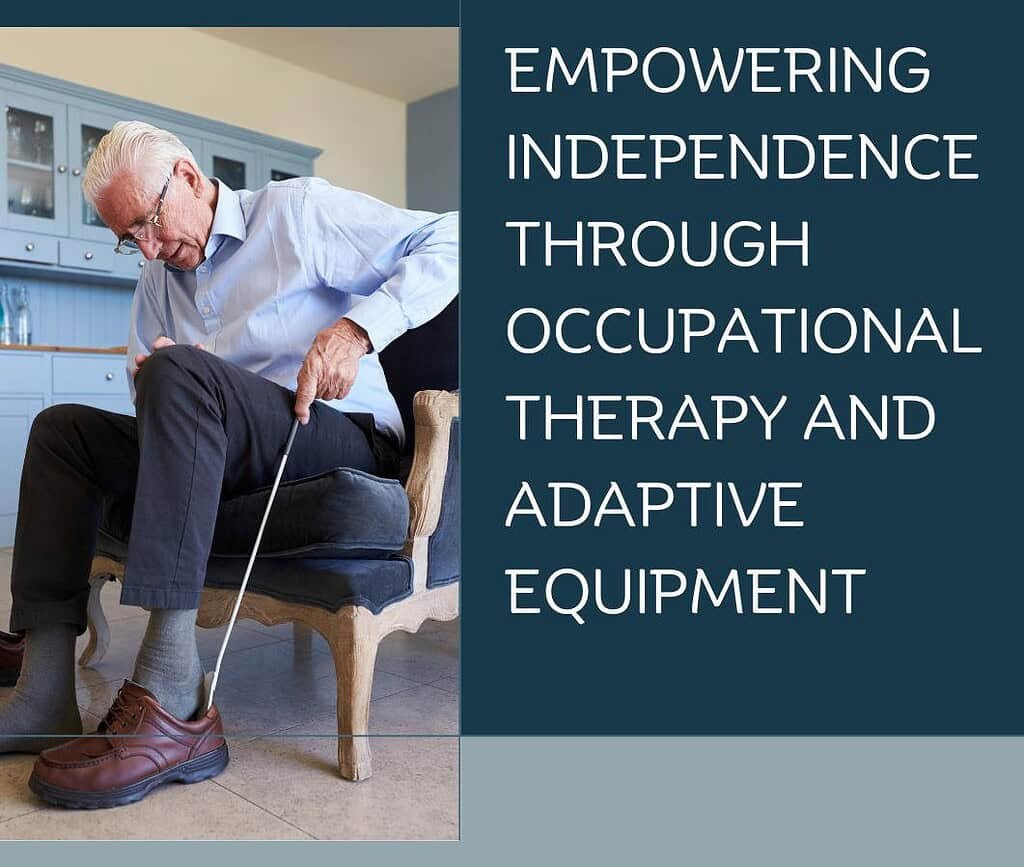
1. Dressing Aids: Tools that make putting on clothes, socks, and shoes more manageable, ensuring independence in the daily routine. Items may include a dressing stick, reacher/grabber, sock aid, button aid, long shoehorns, and more!
2. Eating and Drinking Aids: Adaptive utensils, cups, and plates cater to individuals with motor or grip difficulties, promoting independence during meals. Examples include a nosey cup, weighted utensils, a scoop dish, divided plates, and spill-proof cups. There are also adaptive items, such as rocker knives and one-handed cutting boards to help individuals during meal preparation.
3. Bathing and Toileting Aids: Enhancing safety and independence in personal hygiene, these aids are designed to make daily routines more accessible. Bathing and toileting aids include toilet safety frames, bath mitts, shower chairs, raised toilet seats, toilet hygiene aids, and grab bars.
Customizing Adaptive Equipment in Occupational Therapy
The key to successful integration lies in a personalized approach. Occupational therapists conduct thorough assessments to determine individual needs and preferences. Collaborative efforts between therapists, clients, caregivers, and other healthcare professionals ensure that adaptive equipment is tailored to suit each person’s unique requirements.
In the ever-evolving field of occupational therapy, adaptive equipment stands as a beacon of empowerment. Considering the countless ways in which these adaptive tools enhance independence, occupational therapists encourage individuals facing challenges to explore the possibilities that adaptive equipment can unlock. By breaking down barriers, fostering collaboration, and embracing personalized solutions, OT’s assist individuals in many ways, including the use of adaptive equipment, to regain independence.
If you or a loved one are seeking personalized solutions, to regain control over daily activities, consider scheduling a consultation at REHABILITY. Our commitment goes beyond therapy – we understand that everyone’s journey toward independence is unique, and we are here to guide and support you every step of the way! You can also view several of Rehability’s recommendations here: https://rehabilitygroup.com/rehability-resources/
Rehability Prosthetics, Orthotics & Rehabilitation
Spring Hill, FL
352-701-0494
DISCLAIMER: This article is intended to provide general health information and is not intended to provide individual-specific medical advice, diagnosis, or treatment