For individuals with above-knee amputations, choosing the right prosthetic knee can have a major impact on mobility, confidence, safety, and quality of life. Traditional mechanical knees have provided reliable function for decades, but advances in technology have introduced a new generation of devices known as microprocessor-controlled knees (MPKs).
MPKs combine mechanical components with electronic sensors and computerized control systems to adjust the knee’s resistance and behavior during walking. This technology allows the prosthesis to respond to changes in the user’s movement, walking speed, terrain, and activity level in ways that traditional mechanical knees cannot.
What Is a Microprocessor-Controlled Knee?
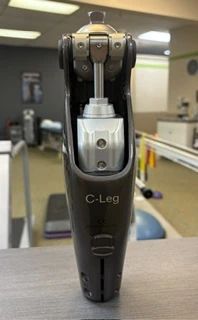
A microprocessor-controlled knee is a prosthetic knee that uses a computer processor to continuously monitor and regulate knee movement.
Sensors within the knee can detect information such as:
- Walking speed
- Knee position and angle
- Load applied to the prosthesis
- Changes in walking patterns
- Stance and swing phases
- Changes in terrain or activity
The microprocessor analyzes this information and adjusts the hydraulic or mechanical resistance of the knee, helping the user achieve a more controlled and natural gait. Unlike a mechanical knee, which generally relies on preset mechanical settings, an MPK can make adjustments many times during a single walking cycle.
Benefits for Prosthetic Users
Improved Safety
One of the most important benefits of MPKs is their ability to provide increased stability during certain situations. Some systems can recognize conditions associated with potential stumbling and rapidly increase resistance to help prevent the knee from buckling. This can be particularly valuable for individuals who regularly encounter uneven surfaces, stairs, ramps, or other challenging environments.
More Natural Walking
MPKs can provide more dynamic control throughout the gait cycle. By adjusting resistance based on the user’s movement, the prosthesis can help produce a smoother and more consistent walking pattern. Improved control may also reduce some of the compensatory movements that users develop when walking with less responsive prosthetic knees.
Navigating Different Terrain
Everyday environments are rarely perfectly flat. Sidewalks, grass, ramps, stairs, gravel, and uneven surfaces can all present challenges for prosthetic users. Modern MPKs can respond to changes in walking conditions and provide different levels of resistance depending on the activity. This can make community ambulation more manageable and potentially increase the user’s confidence when navigating unfamiliar environments.
Who May Benefit From an MPK?
MPKs are not necessarily the best solution for every individual with an above-knee amputation. Patient selection should consider several factors, including:
- Functional mobility level
- Strength and balance
- Activity level
- Home and work environments
- Fall history or safety concerns
- Cognitive ability
- Goals for prosthetic use
- Ability to participate in rehabilitation
A highly active individual who frequently walks in the community may have different needs than someone who primarily ambulates around their home. This is where the role of the prosthetist becomes particularly important. The prosthetist must evaluate the patient’s goals and functional needs before recommending a particular knee.
Conclusion
Microprocessor-controlled knees have transformed the possibilities of lower-limb prosthetic care. By using sensors and computerized control systems to adapt to the user’s movement, MPKs can provide improved stability, smoother gait, greater adaptability, and increased confidence for many prosthetic users. For prosthetists and other professionals in the prosthetics and orthotics field, understanding this technology is becoming increasingly important. The future of prosthetics is moving toward devices that are not only mechanically functional but also responsive, adaptive, and increasingly personalized to the individual user.
Interested in learning more about microprocessor-controlled knees?
If you or a family member has an above-knee amputation and would like to learn whether a microprocessor-controlled knee may be appropriate for your needs and lifestyle, contact Rehability Prosthetics & Orthotics at 352-701-0494 to schedule a consultation with our prosthetics team.
DISCLAIMER: This article is intended to provide general health information and is not intended to provide individual-specific medical advice, diagnosis, or treatment.